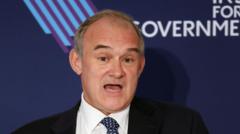
Lib Dem leader Ed Davey has called on incoming Prime Minister Andy Burnham to prioritize electoral reform before the next general election, framing it as essential to fulfilling his pledge to transform British politics. Davey urged Burnham to "be brave" and implement a shift away from the current first-past-the-post system, a long-standing demand from the Liberal Democrats that has shaped party strategy for decades.
The push comes at a pivotal moment. Burnham's incoming government faces pressure to deliver on campaign promises around democratic renewal. Electoral reform has historically proven contentious within Labour ranks, with support varying among senior figures. The Lib Dems, however, view proportional representation as foundational to their political identity and have made it a non-negotiable element of any coalition or confidence-and-supply arrangements.
Davey's intervention signals the Lib Dems intend to leverage their influence in Parliament to extract electoral reform concessions. The party's parliamentary strength will matter significantly under Burnham's government. Any shift to proportional representation would fundamentally reshape British politics, potentially ending the two-party dominance that has characterized Westminster for generations. It would also likely benefit the Lib Dems, who consistently poll higher in support than their seat count reflects under first-past-the-post rules.
The timing reflects broader tension between electoral tradition and democratic modernization. Burnham's government has the political window to act on this issue early in its term. Delaying reform until later parliaments historically weakens the appetite for such seismic changes. Davey's call underscores that the Lib Dems plan to hold Burnham to his stated commitment to reinvigorate British democracy, making electoral reform a litmus test for whether the new government genuinely intends to break with Westminster conventions or simply talk about change.