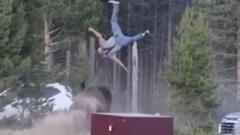
A bison in Yellowstone National Park attacked a grandfather, ramming him several metres into the air in an encounter that unfolded with startling speed. The man and his grandson had positioned themselves what they believed was a safe distance from the animal before the bison charged and struck him violently.
The incident underscores the unpredictable danger posed by wildlife in Yellowstone, where bison roam freely across nearly 3,500 square miles of protected terrain. These massive animals, weighing up to 2,000 pounds, move deceptively fast and show little tolerance for human proximity, despite their docile appearance.
Park officials have long warned visitors to maintain at least 25 yards from most wildlife and 100 yards from bears and wolves. Yellowstone sees hundreds of thousands of visitors annually, and bison encounters have become increasingly common as the herd population has rebounded to around 5,000 animals. Most attacks occur when visitors underestimate the animals' speed or fail to respect established safety distances.
Bison attacks remain relatively rare given visitor numbers, but they happen with enough regularity that park rangers treat them as foreseeable risks. The animals become particularly aggressive during calving season in spring and the rut in fall, when testosterone levels spike and they defend territory more aggressively.
The grandfather's incident serves as a stark reminder that Yellowstone remains wild habitat, not a petting zoo. No matter how calm an animal appears from a distance, approaching too closely or allowing it to approach you invites serious injury or death. The park's advisory boards continue emphasizing that wildlife encounters can turn violent in seconds, and visitors bear responsibility for their own safety and that of others in the ecosystem.