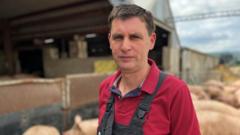
Scottish pig farmers are rejecting a £2 million support package from the Scottish government, arguing the money falls short of their mounting losses. The sector hemorrhages roughly £1 million per month, making the government relief largely symbolic against the scale of the crisis.
Farmers cite feed costs and volatile commodity prices as primary drivers of their financial collapse. The UK's exit from the European Union has compounded supply chain disruptions, pushing input costs to unsustainable levels. Pig farmers operate on razor-thin margins, and the current market cannot absorb these expenses.
The £2 million offering appears token compared to industry needs. Scotland's pig farming community counts on livestock as a stable income stream, but profitability has evaporated. Some operations report cutting herd sizes or halting breeding programs to stanch losses. Others consider exiting the sector entirely.
The farming sector views the government response as insufficient acknowledgment of the crisis. Industry representatives argue that short-term cash injections cannot solve structural problems. They want long-term policy solutions addressing import competition, labor shortages in processing plants, and energy costs that impact refrigeration and operations.
Scottish farmers occupy a vulnerable position within the UK supply chain. Processing capacity remains limited, forcing dependence on English facilities and inflating transport costs. Export barriers to EU markets have closed a traditional revenue source for Scottish producers.
The government funding package signals acknowledgment but lacks the scale required to stabilize the industry. Without deeper intervention addressing trade policy, energy support, and processing infrastructure, pig farmers warn of sector collapse that could permanently damage Scotland's agricultural output and rural economies dependent on farming activity.