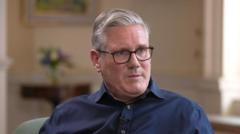
Sir Keir Starmer has given his first interview since resigning as Prime Minister, describing his departure as an "intensely personal" decision in remarks to the BBC. The outgoing leader acknowledged the weight of stepping away from power, calling it "really tough" to accept that his political career had reached its end.
Starmer's candor marks a departure from his typically measured public persona. He offered few details about the specific triggers for his resignation but emphasized the emotional toll of relinquishing the role. The interview signals an attempt to control his narrative as he exits Downing Street, addressing both the immediate shock of his departure and his political legacy.
The timing of Starmer's remarks carries particular significance given the apparent uncertainty surrounding his successor. His warning directed at Andy Burnham, the Greater Manchester mayor, hints at internal Labour Party tensions over the leadership transition. Burnham has been floated as a potential contender, though his exact standing remains unclear following Starmer's exit.
The resignation itself represents a stunning reversal for Labour, which secured a landslide election victory under Starmer's leadership just months earlier. The party's rapid collapse from electoral dominance to leadership crisis underscores deep organizational fractures and suggests policy or coalition disagreements triggered the implosion.
Starmer's reflective tone in the BBC interview appears designed to preserve his reputation during what could be a lengthy period out of power. By framing his decision as personal rather than forced, he positions himself as someone who made a principled choice rather than a leader pushed out by party rebellion or public pressure. Whether this framing resonates with Labour members during the succession race remains to be seen.