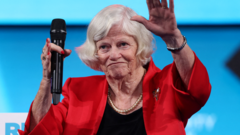
Ann Widdecombe, the former Conservative MP and polarizing political figure, has died. Those who knew her across Westminster describe a politician defined by directness, charm, and an unwillingness to dodge difficult subjects. Colleagues from both sides of the aisle respected her combative style and refusal to retreat into political evasion, even when her positions sparked fierce disagreement.
Widdecombe served as MP for Maidstone from 1987 to 2008 and held junior ministerial roles under Margaret Thatcher and John Major. She became a public figure through her advocacy on moral and social issues, often taking stances that separated her from mainstream Conservative consensus. Her conversion to Catholicism in 1993 and her vocal opposition to abortion shaped her public profile throughout her parliamentary career.
Beyond Westminster, Widdecombe maintained visibility through television appearances, reality competition work, and op-eds on cultural matters. Her combative personality and refusal to soften her positions made her either a refreshing straight-talker or a problematic figure, depending on who assessed her. What remained constant was the respect she commanded for intellectual consistency and personal conviction.
Those who worked alongside her cite her likeability as a colleague despite ideological divides. She answered direct questions with direct answers, a trait increasingly rare in modern politics. Her pugnacious approach to debate contrasted sharply with the evasiveness that defines contemporary political discourse, earning her grudging admiration even from opponents.
Her influence extended beyond her parliamentary tenure into cultural commentary and entertainment, proving her willingness to engage with audiences outside traditional political spheres. Widdecombe represented a particular brand of principled, uncompromising conservatism that shaped 1990s British politics.