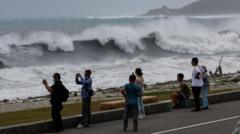
Typhoon Bavi, a colossal storm system spanning 1,000 kilometers across, is barreling toward Taiwan and southeastern China with catastrophic force. Meteorologists classify it as one of the strongest typhoons to hit the region in decades, triggering emergency preparedness across multiple nations.
The Philippines already faces devastating consequences from the storm's outer bands. Landslides triggered by heavy rainfall have killed at least 15 people, with rescue operations ongoing in affected provinces. Flooding has displaced thousands and damaged agricultural land across the archipelago's mountainous regions.
Taiwan's government activated its disaster response protocols as forecasters predicted a direct hit within days. Residents in vulnerable coastal areas received evacuation orders. Schools and offices prepared for closures. The island's weather service issued typhoon warnings with maximum sustained winds projected to exceed 195 kilometers per hour at landfall.
In southeastern China, Guangdong province mobilized emergency services and secured ports ahead of the storm's arrival. Officials suspended ferry services and advised fishing vessels to return to harbor immediately. The region's fishing industry, dependent on stable maritime conditions, faces significant economic losses from the extended shutdown.
Historical data shows typhoons of Bavi's magnitude cause widespread infrastructure damage, destroy crops, and generate deadly storm surge. The 1,000 km width means the system will impact an unusually expansive area, extending damage potential across multiple provinces and island regions.
Climate scientists note that warming ocean temperatures in the western Pacific continue to fuel stronger typhoon systems. Bavi's intensity aligns with models predicting more severe storms as global conditions shift.
Regional governments coordinated preparedness efforts, sharing real-time weather data and coordinating evacuation logistics. The international scope of the threat required cross-border communication between Philippine, Taiwanese, and Chinese authorities to manage rescue operations and relief distribution.