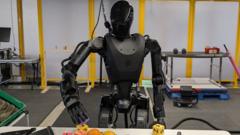
Military forces worldwide are testing humanoid robots for potential combat and support roles, though actual battlefield deployment remains years away. The U.S. Department of Defense, alongside allied nations, currently explores how machines designed with human-like physiology could perform reconnaissance, logistics, and hazardous material handling tasks in conflict zones.
Humanoid platforms offer theoretical advantages over wheeled or tracked robots. Their bipedal design navigates uneven terrain and obstacles that traditional military robotics struggle with. They manipulate tools, climb stairs, and operate equipment built for human operators. Companies like Boston Dynamics and startups backed by defense contractors have showcased prototypes capable of these functions.
Yet deployment faces serious hurdles. Battery life remains limited, lasting hours rather than days. AI systems powering autonomous decision-making lack the reliability required for life-or-death scenarios. Ethical and legal frameworks governing lethal autonomous weapons don't exist globally. Cost remains prohibitive. A single advanced humanoid platform can exceed $150,000.
Current military programs focus on non-combat applications. The U.S. Navy explores robots for ship maintenance and decontamination. The Army tests units for supply transport in difficult terrain. South Korea's military has experimented with armed sentry robots at the DMZ, though these remain supervised by human operators.
Experts warn that autonomous weapons systems raise accountability questions. Who bears responsibility for a robot's mistake in combat? International bodies including the United Nations have called for regulation before widespread deployment occurs.
Military planners acknowledge humanoid robots won't replace soldiers imminently. Integration into actual combat requires breakthroughs in autonomy, power systems, and international legal agreements. The technology serves as a long-term research avenue rather than an immediate tactical shift.