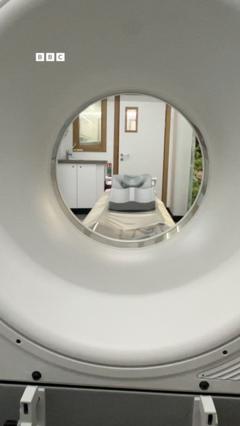
Sandra Champkins had no warning signs. No cough, no chest pain, no reason to suspect anything was wrong. Then she walked into a Tesco car park in Banbury and stepped into a mobile CT scanning unit, part of a UK pilot program screening asymptomatic people for lung cancer.
The scan detected early-stage lung cancer. Champkins credits that chance encounter with saving her life.
The Banbury screening initiative represents a shift in how the NHS approaches lung cancer detection. Historically, scans happened after symptoms emerged, often when the disease had already progressed. Mobile units stationed in high-traffic locations like supermarket car parks democratize access to imaging, reaching people who might never schedule a routine screening otherwise.
Lung cancer kills roughly 35,000 people annually in the UK. Early detection transforms survival odds dramatically. Stage one patients show five-year survival rates above 80 percent. By stage four, that number plummets to under 10 percent. Champkins' asymptomatic discovery means her cancer likely caught before it spread.
The UK's National Health Service has expanded low-dose CT screening pilots across several regions, targeting current and former smokers aged 50 to 77. These programs aim to identify cancers when intervention works best, before patients develop symptoms that signal advanced disease.
Champkins' story demonstrates the real-world impact of preventive screening infrastructure. She underwent surgery and is now cancer-free. Her experience underscores why mobile screening units matter, particularly in reaching working-class populations who face barriers to proactive healthcare. The Tesco car park wasn't a hospital or specialist clinic. It was convenient, accessible, and it caught cancer early.
As NHS trusts evaluate these pilot programs for wider rollout, cases like Champkins' provide compelling evidence that bringing screening directly to communities works.