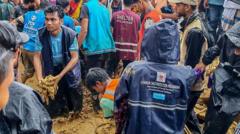
A landslide triggered by heavy monsoon rains struck a girls' school in southeastern Bangladesh, killing eight people. Rescue teams recovered bodies from the mud following the disaster.
The incident unfolded as the region faced intense rainfall typical of monsoon season. The school became engulfed when earth and debris cascaded down nearby slopes, burying structures and trapping occupants. Rescuers worked through difficult conditions to extract victims from the debris and surrounding mud.
Bangladesh's southeastern region sits in a zone prone to landslides during the monsoon season, which runs from June through September. The terrain's steep slopes combined with saturated soil from prolonged rainfall create dangerous conditions. Schools and residential areas in these regions face recurring threats during peak weather months.
The disaster underscores ongoing vulnerabilities in infrastructure across Bangladesh's hill tracts. Communities there operate with limited warning systems and evacuation protocols. Early monsoon forecasts and geological surveys rarely translate into rapid protective action for remote areas.
This incident marks one of several landslide fatalities recorded in South Asia during recent monsoon cycles. The region grapples with balancing development against natural hazard exposure. Schools in landslide-prone zones face particular pressure to implement safety measures, yet resources remain constrained in many districts.
The Bangladesh government has faced criticism for slow disaster preparedness improvements in vulnerable southeastern communities. Survivors and families of the deceased often wait weeks for official investigations and compensation processes.