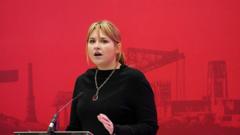
Hollie Ridley steps down as Labour's general secretary following the party conference, concluding her tenure after orchestrating the ground campaign that delivered Labour's 2024 landslide victory. Ridley's departure marks the end of a pivotal chapter in the party's recent resurgence.
Under Ridley's leadership, Labour rebuilt its organizational machinery and reconnected with voters across constituencies. Her campaign infrastructure proved decisive during the general election, where Keir Starmer's party crushed the Conservatives with a historic majority. The general secretary role operates largely behind the scenes, managing party operations, finances, and voter outreach, making Ridley's hands-on approach to ground organization particularly impactful during the election cycle.
Her decision to step down after conference suggests a natural transition point. New Labour leadership often brings fresh personnel at top administrative levels. The party must now find a successor capable of maintaining organizational momentum as Starmer's government enters its early governing phase. The timing allows for continuity planning and a smooth handover before the next electoral cycle.
Ridley's exit reflects broader Labour restructuring following electoral victory. The party has shifted from opposition mode to governing mode, requiring different operational priorities. Campaign strategy and voter mobilization take backseat to administrative efficiency and government coordination.
Labour faces the challenge of sustaining its organizational advantage without Ridley at the helm. The party's machinery proved robust under her stewardship, but successor leadership will determine whether those gains hold. Her departure comes as Labour consolidates power and tests whether the electoral coalition that delivered 2024's victory can translate into sustained support across parliamentary terms.