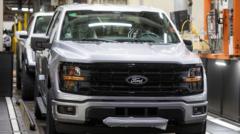
Ford has quietly reversed course on an automation push, bringing back human quality-control engineers after discovering AI systems couldn't replicate the precision of seasoned technicians on the production line.
The carmaker deployed machine learning models to inspect vehicles for defects, aiming to cut costs and accelerate the quality-assurance process. Initial results looked promising on paper. Real-world outcomes told a different story. The AI flagged inconsistent issues, missed subtle manufacturing problems that veteran inspectors caught instantly, and created bottlenecks when uncertainty arose about borderline cases.
The gap exposed a hard truth about factory automation. Computer vision excels at repetitive, well-defined tasks under controlled conditions. Human inspectors possess something algorithms struggle to replicate. pattern recognition built on decades of tactile experience, contextual judgment, and the ability to spot anomalies that training data never anticipated.
Ford's move reflects broader skepticism creeping into manufacturing sectors that embraced AI with evangelical fervor. Carmakers face razor-thin margins on quality. A single defect that reaches customers triggers recalls, warranty claims, and reputational damage that dwarfs any labor savings from automation.
The rehiring also signals labor market leverage. Ford's United Auto Workers union emerged stronger from 2023 negotiations. Admitting that human workers outperform machines sends a message about why those jobs warrant premium wages and job security.
This isn't a wholesale rejection of AI in manufacturing. Ford likely maintains algorithmic systems for other tasks. But the quality-control reversal demonstrates that automation's promised efficiency gains don't always materialize when precision matters most. Veteran technicians remain irreplaceable where human judgment separates acceptable from unacceptable.