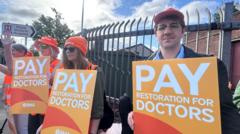
Britain's resident doctors launched strike action over pay disputes, forcing the National Health Service to cancel operations, outpatient appointments, and elective care procedures across hospitals. The British Medical Association confirmed the walkout will disrupt services but maintained that patient safety remains the priority during the industrial action.
The strike reflects escalating tensions between junior physicians and NHS leadership over compensation packages. Resident doctors in the UK have faced years of wage stagnation while inflation eroded their earning power. Their base salaries lag significantly behind peers in other developed nations, prompting the BMA to push for substantial pay increases to address recruitment and retention crises in the medical profession.
The union represents thousands of resident doctors, many early in their careers and burdened with student debt. The strike action targets the government's healthcare funding structure and NHS staffing models. Hospital administrators scrambled to reschedule non-emergency procedures while maintaining emergency and critical care services. The cancellations will create backlogs in an already stretched system facing record waiting lists.
The BMA's statement acknowledged the operational strain the strike imposes but framed it as necessary pressure to secure better working conditions and compensation. Junior doctors' strikes have become increasingly common across the NHS as staffing shortages persist and morale deteriorates. The walkout coincides with broader healthcare worker unrest, including action from nurses and consultants over similar pay grievances.
The dispute underscores structural challenges facing the NHS, where wage growth has not kept pace with healthcare costs or inflation. The strike will likely intensify negotiations between the BMA and government health officials. Without resolution, further industrial action could follow, deepening the backlog crisis in Britain's publicly funded health system.