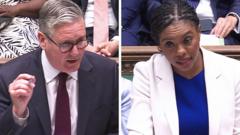
Kemi Badenoch, the Conservative Party leader, attacked Prime Minister Keir Starmer over what she characterized as a £5 billion shortfall in the government's defence investment strategy. Badenoch claimed the Labour administration inherited a fiscal crisis but failed to properly address defence spending commitments, leaving an unresolved problem for future leadership.
The criticism centers on a gap between promised defence expenditure and actual allocations within the government's spending plans. Badenoch framed this as evidence of Labour mismanagement during a period when NATO allies face pressure to increase military investment, particularly given tensions with Russia and broader geopolitical instability in Europe.
The attack comes as the Conservatives position themselves as the party of strong defence spending ahead of the next election cycle. By highlighting what she views as Labour's under-funding of defence, Badenoch aims to challenge Starmer's credibility on national security, a traditionally strong Conservative messaging angle.
The defence spending debate reflects broader Westminster tensions over fiscal priorities. Labour has argued it inherited significant economic challenges that constrained immediate spending increases. Defence spending remains politically charged, with both parties claiming to prioritize military readiness while managing broader budget constraints.
The reference to Burnham likely alludes to Andy Burnham, the mayor of Greater Manchester and prominent Labour figure who has been vocal on regional investment priorities. Badenoch's framing suggests the current spending trajectory creates complications for Labour figures attempting to balance defence commitments with other spending demands.
This exchange underscores how defence investment has become central to UK political messaging, with each party seeking to project strength while defending fiscal decisions to voters concerned about both security and public services funding.