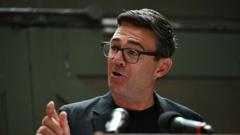
Keir Starmer's potential successor is plotting a devolution of power from Westminster. Andy Burnham, the former Greater Manchester mayor, signals he would establish a dedicated No. 10 unit in Manchester if he ascends to Labour leadership and wins a general election.
The move reflects growing momentum toward regional governance and a retreat from London-centric politics. Burnham's proposal involves splitting his time between Manchester and Downing Street, working several days weekly from the northern city. This represents more than symbolic gesture. It signals intent to embed central government operations outside the capital, a pitch that resonates with Labour's "levelling up" messaging, though the party frames it as genuine devolution rather than the Conservatives' contested rhetoric.
Burnham built his political brand on regional advocacy, championing Greater Manchester's interests during his tenure as metro mayor. His plan capitalizes on this track record while positioning Labour as the party willing to decentralize power from Westminster elites. The proposal lands amid leadership speculation within Labour ranks, though Starmer remains Prime Minister following Labour's 2024 election victory.
The Manchester-based unit would handle northern affairs and potentially regional economic policy. This structure suggests a recalibration of how government operates, moving away from the tradition of PM-centric London administration. Regional mayors and local leaders would theoretically gain faster access to decision-making processes, collapsing the distance between Whitehall and municipal governments.
Critics may question whether a part-time regional presence genuinely translates to substantive power-sharing or remains performative. The logistics alone present challenges. splitting executive time between two cities risks diluting focus during crises requiring immediate attention.
Still, Burnham's plan taps into voter hunger for political change and regional representation. Labour has struggled to rebuild trust in "Red Wall" constituencies. A PM willing to work from Manchester signals a break from traditional power structures and appeals to voters tired of Westminster insularity.