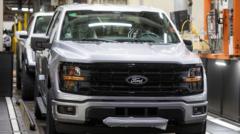
Ford has rehired human engineers after discovering that artificial intelligence fell short in quality control operations. The automaker deployed AI systems to inspect vehicles on assembly lines, expecting automation to cut costs and improve consistency. Instead, the technology missed defects that veteran technicians routinely caught.
The company discovered gaps in AI's detection capabilities during implementation at manufacturing facilities. Where experienced inspectors flagged issues with welds, paint application, and component alignment, the algorithms generated false negatives. Ford determined that human expertise, built over decades of hands-on work, provided a level of pattern recognition and contextual judgment that current AI systems could not replicate.
This reversal highlights a recurring problem in manufacturing automation. While AI excels at repetitive, clearly defined tasks in controlled environments, quality assurance demands nuance. Assembly-line defects vary widely. A paint imperfection might indicate a serious underlying problem or prove cosmetic depending on location and severity. An AI model trained on historical data struggles with edge cases and the spatial reasoning required for real-time decision-making on a moving production line.
Ford's move also reflects labor dynamics in the post-pandemic economy. Skilled manufacturing workers command premium wages, yet companies increasingly recognize that replacing them entirely creates new problems. Hybrid models, where AI handles routine scans and humans investigate flagged items, are gaining traction across the auto industry. General Motors and other manufacturers have similarly experimented with AI-augmented quality checks rather than full replacement.
The rehiring decision underscores a broader truth: AI remains a tool, not a replacement for domain expertise in complex, safety-critical environments. For automakers, vehicle safety carries legal and brand risks that demand the judgment only experienced technicians provide. Ford's experience suggests that the path forward involves partnership between machine efficiency and human discernment, not wholesale substitution.