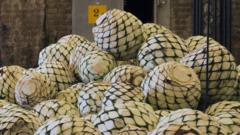
India's agave plants, long overlooked as invasive vegetation, have become the foundation of a booming spirits category. Distillers across the country now harvest wild agave to produce spirits that rival mezcal and tequila, traditional Mexican products made from the same plant.
The shift marks a departure from India's domination by rum, whiskey, and brandy imports. Local producers see agave as a chance to build an export-ready category with global appeal. The plants thrive in India's climate with minimal water input, making them economically and environmentally sustainable compared to water-intensive grain-based spirits.
Several startups have already launched agave spirits brands, attracting investment from hospitality groups and beverage entrepreneurs. Production focuses on craft positioning, emphasizing terroir and traditional fermentation methods borrowed from Mexican tradition but adapted for Indian palates and ingredients.
The spirits industry recognizes this as a category with room to grow. Agave spirits currently occupy a niche in India's alcohol market, dominated by whiskey and imported brandy. However, premiumization trends and consumer appetite for craft, artisanal products create space for new entrants.
Distribution remains a challenge. India's alcohol regulations vary by state, complicating nationwide scaling. Yet early players are building direct-to-consumer channels and securing placement in premium hospitality venues. Some producers target exports to Western markets where agave spirits command higher price points.
This development mirrors how other countries have built distinctive spirits categories around local botanicals. India's agave movement positions the nation as both an agricultural innovator and a serious player in the global spirits conversation, challenging Mexico's centuries-old monopoly on agave-based alcohol.