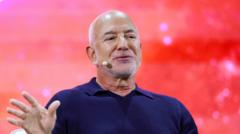
Jeff Bezos predicts artificial intelligence will generate jobs for humans rather than displace workers, arguing the technology creates labor shortages instead of unemployment. The Amazon founder, who now leads robotics and space ventures through his other companies, positions AI as a net positive for employment.
Bezos frames the AI moment as fundamentally different from previous automation cycles. Rather than reducing total jobs available, he believes AI will amplify demand for human workers across new sectors. His reasoning follows a familiar Silicon Valley narrative. Historical technological shifts, the argument goes, destroyed certain roles but created entirely new categories of work. The internet killed some jobs but spawned entire industries around web development, digital marketing, and e-commerce logistics.
His comments carry weight given his track record building Amazon into a company that now employs over 1.5 million people globally. Yet his optimism contrasts sharply with broader economic anxieties. Labor economists remain divided on AI's employment impact. Some studies suggest generative AI could automate tasks across healthcare, legal services, and creative industries within years. Others note that displacement and creation rarely affect the same workers or communities equally.
Bezos owns stakes in multiple tech-forward ventures including robotics company Boston Dynamics and his space company Blue Origin. Both fields theoretically depend on AI advancement. His bullish take on AI employment may reflect confidence in those bets.
The statement lands as tech companies face intense scrutiny over automation. OpenAI, Google, and Meta have all scaled AI capabilities while managing workforce reductions. Bezos essentially argues the worry is premature. Time will reveal whether his prediction holds for workers in routine industries or applies only to high-skill sectors already benefiting from technological acceleration.