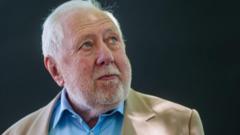
Roy Hattersley, the Labour politician who died this week, spent decades pushing his party toward modernity while remaining one of its most combative internal voices. A fixture in Westminster from the 1960s through the 1990s, Hattersley served as Deputy Leader under Neil Kinnock and held several senior cabinet roles, including Shadow Home Secretary, where he built a reputation as a tough voice on law and order.
Hattersley championed Labour modernisation during the party's wilderness years after Margaret Thatcher's electoral dominance. His willingness to challenge orthodox leftist positions, particularly on defence and economic policy, made him a polarising figure within Labour ranks. Party traditionalists viewed him as too pragmatic. The hard left saw him as a traitor to socialist principles. Yet his strategic positioning helped create intellectual space for the party's eventual pivot toward New Labour under Tony Blair, even if Hattersley himself remained critical of Blair's approach.
Beyond Parliament, Hattersley became one of Britain's most prolific political columnists and authors. His weekly Guardian column reached millions and demonstrated a rare ability to articulate complex policy arguments with wit and accessibility. He wrote over 20 books, spanning biography, politics, and social commentary. His literary output proved that politicians could sustain serious intellectual life beyond Westminster.
Hattersley's career embodied a particular Labour tradition. the party intellectual willing to alienate colleagues in pursuit of what he believed was necessary evolution. He proved Labour could absorb internal dissent and still function, even if friction with ideological purists never fully resolved. His influence on the party's modernisation arc, though contested at the time, appears clearer now. Hattersley showed that adaptability need not mean abandoning core Labour values, a tension the party continues to navigate today.