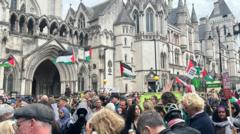
The Court of Appeal upheld the Home Office's ban on Palestine Action, reversing a High Court decision that would have dissolved the proscription order. The ruling finds the government's designation of the activist group as a terrorist organization lawful under UK law.
Palestine Action, which has conducted direct action campaigns against Israeli weapons manufacturers operating in Britain, was proscribed in November 2021. A High Court judge initially ruled the ban unlawful in March 2024, citing insufficient evidence that the group met the legal threshold for terrorist designation. The Home Office appealed that decision.
The Court of Appeal disagreed with the lower court's assessment, determining that the Home Office presented sufficient grounds for the proscription. The judges found the group's actions, including occupying facilities and damaging property at weapons manufacturers, met the statutory definition of terrorism under the Terrorism Act 2000.
Palestine Action's legal team indicated they plan to pursue further appeals. The group has maintained that its civil disobedience tactics target military-industrial supply chains and do not constitute terrorism.
The case reflects deeper tensions over protest rights, state security definitions, and British foreign policy. Proscription remains one of the most severe restrictions on political groups in UK law. The ruling limits what Palestine Action members can legally do, including fundraising, membership recruitment, and public association with the organization.
This decision carries implications for other protest movements facing proscription claims and tests how courts balance free speech against national security designations in contexts involving geopolitical disputes.