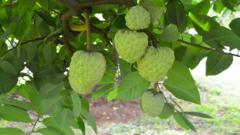
Custard apples are moving from niche orchards into mainstream global agriculture, driven by demand in wealthy markets and the fruit's resilience to climate stress. The trees thrive in arid conditions that challenge conventional crops, making them attractive to farmers in India, South America, and Southeast Asia as water scarcity intensifies.
The challenge lies in the fruit itself. Custard apples bruise easily during transport, and their short shelf life complicates long-distance shipping to premium markets in Europe and North America. Retailers struggle with display logistics since the fruit demands careful handling that conventional logistics networks don't accommodate.
India leads production and is scaling cultivation in drought-prone regions. Growers there now use specialized packaging and controlled-atmosphere shipping to extend freshness. Southeast Asian producers invest in cold-chain infrastructure to reach Asian urban centers where the fruit commands premium pricing. Brazilian and Peruvian operations target the North American market.
The fruit's sweet, creamy interior and relatively low water requirements position it well for climate-disrupted farming. Custard apple trees produce yields within five years, faster than many alternatives, and tolerate poor soil conditions that exclude other crops. Agricultural economists see expansion potential across sub-Saharan Africa and the Middle East.
Export volumes remain modest compared to bananas or avocados, but growth tracks upward. The fruit's unfamiliar flavor profile actually appeals to consumers seeking novelty in produce sections. Whole Foods and European specialty grocers now stock them seasonally.
What limits scale isn't farming capacity but post-harvest infrastructure. Solving the bruising problem through better packaging materials and standardized cold-chain protocols could unlock significant export growth. For now, custard apples remain a high-margin crop for growers willing to invest in handling systems.