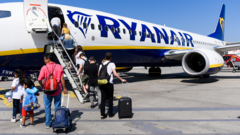
The UK's Competition and Markets Authority launched a formal investigation into Ryanair's practice of charging parents to sit adjacent to their children on flights. The regulator scrutinizes whether the budget carrier breaches consumer protection laws by imposing these mandatory seat-selection fees, which can escalate costs significantly for families.
Ryanair's model separates families by default, forcing parents to purchase premium seating or paid seat reservations to guarantee adjacent placement. The airline argues this system allows flexible pricing and keeps base fares competitive. However, the CMA questions whether these charges constitute unfair commercial practices under UK and EU consumer law, particularly since they target a vulnerable demographic dependent on family grouping for child safety and comfort.
This investigation reflects growing regulatory scrutiny of budget airlines' ancillary revenue strategies. Ryanair generates substantial income through add-on fees, including baggage charges, priority boarding, and seat selection. The airline's aggressive monetization of family seating directly impacts parent decision-making and total trip cost, transforming what competitors often include complimentarily into a profit center.
The probe arrives amid broader European regulatory focus on airline transparency and fairness. Spain's aviation authority previously raised concerns about Ryanair's family-separation tactics. Consumer advocates argue that charging for basic family accommodation exploits parental anxiety and contradicts standard industry practice among major carriers, who typically allow young children to sit with guardians at no additional cost.
The CMS investigation could force Ryanair to restructure its seating policy, removing fees for parents sitting with dependent children or allocating family seats automatically. Any finding against the airline might establish precedent affecting other budget carriers employing similar tactics. For Ryanair, which reported strong profitability partly through ancillary revenue, a regulatory mandate to eliminate these charges represents genuine financial exposure and business model pressure.
The investigation underscores tension between ultra-low-cost airline economics and consumer expectations around family travel, with regulators increasingly siding with fairness over carrier flexibility.