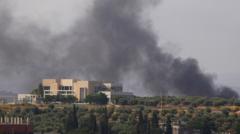
Israel launched fresh air strikes on Lebanon as diplomatic efforts accelerated in the region, with Iran's foreign minister signaling that negotiations with the United States over ending hostilities have reached an advanced stage.
The strikes targeted Lebanese territory on a day when international tensions showed signs of potential de-escalation. Iran's top diplomat indicated that a comprehensive agreement with Washington was approaching completion, though specifics on the deal's scope and timeline remained unclear. The statement arrived amid broader Middle East volatility tied to the Israel-Hamas conflict and its regional spillover.
Israel has maintained an intensive air campaign against targets in Lebanon for months, primarily focusing on positions linked to Hezbollah. The renewed strikes underscore how military operations continue even as diplomatic channels explore paths toward conflict resolution. Lebanese casualties and infrastructure damage have mounted considerably throughout the campaign.
Iran's claim of imminent progress with the US suggests negotiations over the country's nuclear program and regional role may be advancing. Such a breakthrough would represent a significant shift in US-Iran relations, which have remained deeply strained since Washington withdrew from the 2015 nuclear deal in 2018. Any agreement would likely carry implications for Israeli security calculations and broader Middle East stability.
The timing creates an unusual dynamic. Military escalation persists on the ground in Lebanon while peace overtures gain momentum at the diplomatic level. Whether those competing trends will converge toward genuine de-escalation or represent a temporary pause in broader regional conflict remains uncertain. Both Israeli officials and Iranian leadership have historically used diplomatic statements and military action in tandem to strengthen negotiating positions.