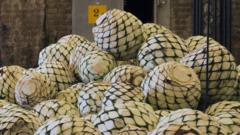
India's agave boom is reshaping the country's spirits landscape. Local distillers are harvesting the succulent plant, which grows wild across Indian terrain, to produce new categories of spirits that challenge established whisky and rum dominance.
Agave cultivation in India remains nascent but accelerating. The plant thrives in arid regions where traditional crops struggle, making it economically attractive for farmers seeking diversification. Unlike tequila production in Mexico, where agave spirits are regulated and protected, India's agave distillers operate in uncharted regulatory territory. This creates both opportunity and risk.
The spirits industry benefits from India's existing infrastructure around fermentation and distillation. Several craft distilleries have already launched agave-based products targeting domestic consumers and export markets. Premium positioning aligns these spirits with global premiumization trends. Consumers increasingly seek alternative categories beyond traditional categories. Agave spirits fill that gap.
Competition intensifies as established alcohol producers watch the category. India's spirits market remains heavily dominated by whisky, rum, and brandy. Agave products currently represent a niche segment but growth trajectories resemble gin's emergence a decade ago. That category exploded from obscurity to mainstream consumption through premiumization and craft narratives.
Supply chain advantages favor Indian producers. Local agave sourcing reduces input costs compared to imported base spirits. This margin structure allows competitive pricing against imported premium brands while maintaining higher profitability than traditional domestic spirits.
Regulatory clarity matters next. The Indian government hasn't established formal standards for agave spirit classification, labeling, or production methods. Clear guidelines would legitimize the category and attract larger capital investment. Without standardization, brands risk being categorized as generic "Indian spirits" rather than distinct agave-based products.
Export potential exists. Global spirits buyers actively seek new origin stories and production methods. Indian agave spirits offer both. Early market entry positions local distillers ahead of multinational competitors who typically move slower into emerging categories.