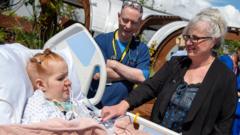
King's College Hospital in London opened an intensive care ward on its rooftop, marking a bold experiment in patient recovery. The outdoor space monitors how exposure to fresh air and natural light affects critically ill patients receiving intensive care treatment.
The rooftop ICU addresses a long-standing problem in hospital design. Traditional intensive care wards isolate patients indoors for weeks or months, with fluorescent lighting and recycled air as standard. Research suggests natural environments accelerate healing and reduce psychological stress, yet few hospitals have tested this approach with their most vulnerable populations.
The ward functions as a full intensive care unit with the same monitoring equipment and staffing as ground-level counterparts. Weather protection exists through retractable panels and heating systems. Patients and families report that outdoor access transforms the experience of critical illness. One patient quoted in the coverage remarked, "I forgot what it's like to be outside," capturing how isolation deepens the trauma of serious hospitalization.
King's College Hospital will gather data on recovery times, infection rates, patient mental health outcomes, and staff wellbeing. Early anecdotal evidence suggests benefits extend beyond patients to nursing staff, who experience lower burnout rates in the outdoor environment.
This model challenges assumptions baked into modern hospital architecture. For decades, infection control protocols and equipment density pushed care inward and upward into windowless boxes. The rooftop ward demonstrates that critical care and nature aren't incompatible. If data supports the initial observations, other major teaching hospitals may replicate the design, reshaping how intensive care functions globally.
The experiment arrives as healthcare systems worldwide grapple with staff shortages and patient trauma from prolonged hospitalization. Even incremental gains in recovery speed or staff retention ripple across budgets and capacity planning.