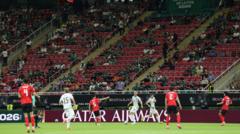
Fifa attributed empty seats at the South Korea versus Czech Republic World Cup match to fans lingering on stadium concourses rather than sitting down, the governing body claimed.
The Group A fixture drew widespread attention for visible gaps in the stands despite being described as a near sell-out. Images circulated showing rows of unoccupied seats during play, raising questions about actual attendance versus reported capacity figures.
Fifa's explanation placed responsibility on fan behavior, contending that spectators simply chose to remain in concourse areas, purchasing food, beverages, and merchandise instead of occupying their assigned seating throughout the match. The assertion suggests the arena operated at stated capacity on paper while presenting a visually sparse appearance on television broadcasts.
This explanation generated skepticism among observers who questioned whether concourse activity alone accounted for the noticeable empty seating visible during broadcast coverage. Stadium attendance patterns at major tournaments typically show fans settling into seats for the duration of matches, particularly during group-stage fixtures.
The incident highlights ongoing scrutiny of World Cup attendance metrics and stadium management. Broadcasting visuals of half-empty sections undermine the spectacle tournament organizers cultivate, regardless of technical explanations about fan distribution within venues. Networks and sponsors invest heavily based partly on the image of packed stadiums that matches deliver to global audiences.
The South Korea-Czech Republic match carried group-stage implications for both nations, making the attendance discourse a secondary narrative to actual competition results. However, the appearance of empty seats in near sell-out fixtures creates persistent questions about event marketing, ticket sales accuracy, and whether reported attendance figures align with observable stadium occupancy during broadcast.