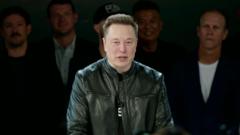
Elon Musk crossed into uncharted wealth territory this week, becoming the world's first trillionaire as his net worth hit $1.11 trillion on the Bloomberg Billionaires Index. The milestone arrived following SpaceX's blockbuster Nasdaq debut, which valued the rocket company at $2.2 trillion.
SpaceX's public listing marks a watershed moment for private space exploration. The company commanded one of the largest IPO valuations ever recorded, reflecting investor appetite for aerospace and satellite infrastructure plays. The offering unlocked roughly $50 billion in primary capital for the company, positioning it to accelerate lunar programs, Mars missions, and Starshield military contracts.
Musk's wealth surge traces directly to his SpaceX stake, which represents the bulk of his fortune. His Tesla holdings, while substantial, play a secondary role in his ascent past the trillion-dollar threshold. The timing catches a broader market rally in aerospace stocks, with defense contractors and space-tech firms commanding premium multiples as geopolitical tensions and satellite demand climb.
The trillionaire status carries symbolic weight beyond personal finance. It underscores the concentration of wealth in tech and space sectors, where a single founder can accumulate more assets than most nations' annual GDPs. SpaceX's valuation also signals that markets now price space infrastructure as essential economic terrain, not speculative moonshot territory.
Musk's companies now span electric vehicles, social media, brain-computer interfaces, and space launch services. This diversification across moonshot industries makes him uniquely exposed to both mainstream consumer tech and frontier markets. Institutional investors betting on space colonization, renewable energy, and AI development are essentially betting on Musk's portfolio.
SpaceX remains private despite the stock listing, a hybrid structure allowing Musk to retain voting control while accessing public capital. This arrangement reflects his preference for long-term bets over quarterly earnings pressure.