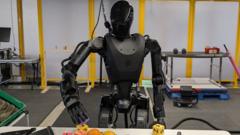
Military researchers across multiple nations are accelerating humanoid robot development for potential combat roles, though practical battlefield deployment remains years away. The U.S. Department of Defense, alongside defense contractors and allied militaries, funds research into bipedal robots capable of navigating terrain designed for human soldiers.
The appeal is clear. Humanoid robots eliminate risk to personnel in high-casualty operations. They operate in environments toxic to humans. Supply chain logistics becomes simpler when machines use the same infrastructure as troops. A robot that climbs ladders and operates existing military equipment requires less battlefield redesign than purpose-built systems.
Current prototypes reveal the gap between theory and deployment. Existing humanoid robots move slowly on uneven ground, tire quickly, and struggle with fine motor control. Boston Dynamics' Atlas and Tesla's Optimus represent the cutting edge, yet both remain research platforms far from weaponization. Battery life constraints and AI navigation limitations compound the problem. A robot that fails mid-mission or misidentifies targets introduces liability issues militaries are still untangling.
Regulatory and ethical obstacles loom larger than engineering ones. International humanitarian law already governs autonomous weapons. The U.N. and human rights organizations scrutinize lethal autonomous systems. Deployment decisions will pit military efficiency against accountability frameworks still under negotiation.
Several militaries are pursuing incremental approaches. Training, reconnaissance, and logistical support roles offer entry points without crossing into direct combat. South Korea and Japan field humanoid prototypes in non-combat military roles. The U.S. Navy explores robotic systems for mine detection and perimeter defense.
Experts project meaningful battlefield capability at five to ten years minimum. Humanoid design itself matters less than the AI directing them. Until machines reliably process complex environments and make contextual decisions, armed forces will keep humans in command roles. The robotics revolution in defense will come slowly, constrained by technology and law in equal measure.