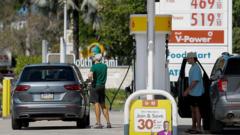
Donald Trump claimed to love inflation as U.S. prices climbed at their fastest rate in three years, sparking immediate pushback from economists and market observers. Trump later clarified that he meant he loved that inflation wasn't higher than it currently stood.
The statement came as the Consumer Price Index showed year-over-year inflation rising to levels not seen since early 2022. Core inflation, which strips out volatile food and energy costs, also ticked upward. Financial markets reacted with caution to both the inflation data and Trump's comments, given the sensitivity around price pressures and Federal Reserve policy.
Trump's initial remark appeared to contradict conventional economic wisdom. High inflation typically erodes purchasing power for consumers and complicates monetary policy decisions. The Federal Reserve had spent 2022 and 2023 aggressively raising interest rates to combat the post-pandemic inflation spike, eventually bringing price growth back down. Recent momentum upward signals potential headwinds for both household budgets and the administration's economic messaging heading into 2025.
The clarification arrived quickly, with Trump asserting he welcomed the fact that inflation remained below certain thresholds. Still, the gaffe highlighted ongoing tension between the administration's economic agenda and the reality of price dynamics in the real economy. Markets scrutinized whether Trump's policies, including potential tariffs and other trade measures, could reignite inflation pressures further.
Economists remained divided on near-term inflation trajectories. Some flagged risks from proposed policies, while others noted moderating trends in certain sectors. The White House faced pressure to explain how it would balance growth priorities with price stability as 2025 unfolds.