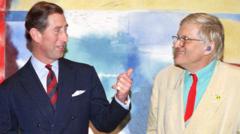
King Charles led tributes to David Hockney following the legendary British artist's death at 88. The monarch called Hockney "one of life's true originals," cementing the painter's status as a cultural titan whose influence stretched across painting, printmaking, photography, and stage design.
Hockney shaped post-war British art through his bold explorations of color, perspective, and intimacy. His pool paintings, particularly "A Bigger Splash," became iconic works that defined 1960s Pop Art and remain among the most recognizable pieces in contemporary art. His practice spanned seven decades, constantly evolving from figurative works to digital experimentation, proving his restless creative intelligence.
Born in Bradford in 1937, Hockney studied at the Royal College of Art in London before relocating to Los Angeles in the 1960s. The California landscape became his muse, yielding luminous paintings of swimming pools and domestic scenes that captured light with photorealistic precision while maintaining an unmistakable artistic hand. His work bridged the gap between fine art and popular culture at a time when that distinction seemed absolute.
Beyond easel paintings, Hockney designed sets for major opera productions, created photocollages, and pushed into digital media before most contemporary artists considered it legitimate territory. His late work expanded into iPad paintings and large-scale photo compositions, demonstrating that age brought no creative stagnation.
The art world mourned not just a painter but an artist who refused categorical boundaries. Museums housing his work, collectors, and younger artists acknowledged how thoroughly Hockney had transformed what painting could accomplish in the modern era. His death marks the end of a generation that rebuilt British art's international reputation after World War II.