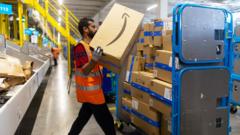
Amazon's dominance in e-commerce spans continents. The Seattle-based company controls roughly 40 percent of U.S. e-commerce sales and wields comparable market share across Europe and other Western markets. No competitor comes close to matching its scale or infrastructure.
Several structural advantages cement Amazon's lead. The company built its logistics network first, spending years operating at razor-thin margins to establish warehouses, delivery systems, and same-day shipping capabilities that rivals cannot replicate without billions in capital investment. This infrastructure compounds over time. The more customers Amazon serves, the more data it collects about consumer behavior and inventory optimization. The more revenue it generates, the more it reinvests in logistics and technology.
Amazon Web Services, the company's cloud division, generates roughly 60 percent of Amazon's operating profits while consuming only a fraction of revenue. This profit engine funds aggressive expansion in retail, undercutting competitors on price without sacrificing profitability. Other retailers lack equivalent revenue diversification.
Regulatory barriers protect Amazon in some regions but cannot fully explain its dominance. Europe's Digital Markets Act imposes restrictions on Amazon's practices, yet the company remains unchallenged. No European retailer built comparable logistics capabilities or invested in technology infrastructure at Amazon's scale. Alibaba dominates Asia-Pacific but has not meaningfully entered Western markets.
Brand loyalty accelerates Amazon's advantage. Prime membership ties customers to the platform. Customers prefer one-stop shopping and free two-day delivery over browsing multiple retailers. Switching costs rise with each Prime purchase, each review left, each saved address. Amazon's recommendation algorithm learns what customers want and presents it faster than competitors can stock it.
Walmart attempted serious e-commerce competition in the U.S. but operates under legacy cost structures and divided management attention. Target and Best Buy carved niches rather than challenged Amazon directly. European retailers like Zalando and Asos focus on fashion, not omnibus retail. None possess Amazon's capital, logistics footprint, or technological prowess.
Amazon's Western monopoly reflects network effects, first-mover advantage, and relentless reinvestment