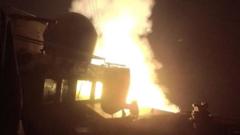
The US and Iran traded direct military strikes for a second consecutive day, escalating tensions across the Middle East. American forces struck military targets in southern Iran, prompting Tehran to retaliate with attacks on US military assets stationed in Kuwait, Bahrain, and Jordan.
The tit-for-tat exchange marks a dangerous acceleration in hostilities between the two nations. Iran's response targeted multiple US military installations across the Gulf region, signaling a willingness to broaden the geographic scope of its operations beyond previous confrontations.
The US strikes focused on Iranian military infrastructure in the south, likely aimed at degrading Tehran's capability to conduct further attacks. Iran's counterstrike demonstrated its capacity to reach American forces spread across multiple countries simultaneously, underscoring the vulnerability of US military positioning throughout the region.
This bilateral exchange represents one of the most direct military confrontations between Washington and Tehran since the 2020 killing of Iranian General Qasem Soleimani. The rapid-fire nature of the strikes, occurring across consecutive days, suggests both nations are locked in an escalatory cycle with limited diplomatic off-ramps visible.
The strikes carry broader implications for regional stability. Israel, US allies in the Gulf, and other stakeholders face increased uncertainty as the US-Iran conflict moves from proxy warfare to direct military engagement. Previous exchanges between the nations have often followed a predictable pattern of action-reaction, but the intensity and speed of this week's strikes break that pattern.
Both sides appear determined to demonstrate resolve and military capability rather than seek de-escalation. The targeting of US assets across multiple countries suggests Iran intends to inflict costs on American regional presence, while US strikes on Iranian military targets serve as a show of force and deterrent.
The coming hours will determine whether this exchange concludes or continues into a third day, with significant consequences for regional peace.