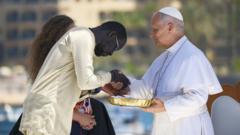
Pope Francis traveled to the Canary Islands to draw global attention to the dangerous migration routes that African and Middle Eastern migrants use to reach Europe. The pontiff visited the Spanish archipelago, a major entry point for people fleeing poverty and conflict, to underscore the humanitarian crisis unfolding in the Atlantic.
The Pope's visit centered on calling for compassion toward migrants undertaking perilous journeys across the sea. He emphasized the need for receiving nations to treat newcomers with dignity and respect rather than viewing migration as a security threat. Francis framed the issue through a moral lens, positioning hospitality as a Christian obligation.
The Canary Islands have emerged as a critical flashpoint in European migration policy. Thousands of people attempt the crossing annually, with many perishing in the journey. Spain's autonomous community has grown strained by arriving migrants, sparking political tension between local officials and Madrid over how to manage the influx.
The papal visit arrived amid broader European resistance to immigration. Right-wing parties across the continent have gained traction by opposing open-border policies, while established politicians grapple with integrating migrant populations. Francis' messaging directly challenges this hardening stance, positioning migration as a human rights issue rather than a border control problem.
By traveling to the Canary Islands, the Pope amplified voices often marginalized in European political discourse. His presence validated migrant experiences and pressured European governments to reconsider punitive policies. The visit reinforced the Vatican's stance as a moral authority on global inequality and human dignity, even as secular leaders prioritize sovereignty and security concerns.