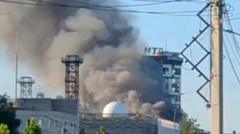
Ukraine's military claims it struck a Russian military manufacturing plant deep inside Russian territory, marking an escalation in its cross-border offensive operations. The strike targeted production capabilities far from the front lines, demonstrating Ukraine's expanding reach with long-range weapons.
The same operation included attacks on a Russian oil refinery and a vessel operating as part of Russia's shadow fleet in the Black Sea. Shadow fleet tankers are older ships, often operating under opaque ownership structures, used to circumvent international sanctions on Russian crude exports. Ukraine has systematically targeted these vessels to degrade Russia's energy revenue streams.
These strikes reflect Ukraine's two-pronged strategy. First, attacks on military infrastructure aim to disrupt weapons production and logistics. Second, targeting energy assets and illicit shipping networks strains Russia's economy and reduces funding available for sustained warfare. Oil refinery strikes particularly damage Moscow's capacity to produce refined fuels needed by the military.
Ukraine relies on Western-supplied long-range systems, including ATACMS missiles and Storm Shadow cruise missiles provided by the US and UK respectively, to conduct strikes at this depth. Each successful operation pushes the boundaries of what Kyiv can strike while operating under shifting restrictions on weapon use imposed by its Western backers.
Russia has not immediately responded to the claims. Verification of strikes deep inside Russian territory remains difficult, though previous Ukrainian claims of similar attacks have been corroborated by open-source intelligence and Russian official acknowledgments.
These operations underscore how the conflict has evolved from static trench warfare into a broader strategic competition targeting the economic underpinnings of Russian military capacity. For Ukraine, degrading Russia's refining and shipping infrastructure offers asymmetric leverage against a larger, better-armed opponent.