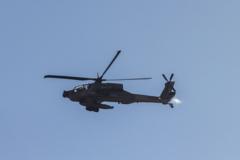
Donald Trump confirmed Iran shot down a U.S. Apache helicopter and pledged a response to the attack. Two crew members were rescued by an American sea drone following the crash.
The incident marks an escalation in military tensions between the United States and Iran. Trump's statement came shortly after the helicopter went down, with rescue operations moving swiftly to recover personnel from the downed aircraft. The involvement of an autonomous sea drone in the rescue operation underscores the military's deployment of unmanned systems for rapid response missions.
The specifics of where and when the attack occurred, along with the exact circumstances leading to the helicopter's downing, remain central details in ongoing reports. Trump's vow to respond signals potential further military action, raising stakes in what appears to be a mounting confrontation between Washington and Tehran. The recovery of both crew members alive represents a positive outcome in an otherwise volatile situation.
This incident occurs within a broader context of U.S.-Iran tensions that have periodically flared into military confrontations. The Apache is one of the U.S. military's most advanced attack helicopters, and its loss, even temporarily, carries symbolic weight beyond the immediate operational impact. The successful rescue of crew members via drone technology demonstrates modern military capabilities in crisis response, though it does nothing to diminish the severity of the underlying military engagement.
Trump's explicit acknowledgment and promised response suggest the administration views this as a deliberate act requiring reciprocation, not an isolated incident. How and when that response materializes will likely shape the trajectory of U.S.-Iran relations in coming weeks.