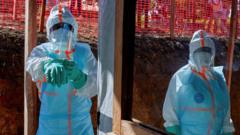
Three research teams are racing to develop new Ebola vaccines as health authorities brace for potential outbreaks. IAVI (International AIDS Vaccine Initiative), Moderna, and the University of Oxford each have candidates in development, signaling serious concern about resurgence in endemic regions.
Moderna's involvement marks the biotech company's expansion beyond COVID-19 work into hemorrhagic fever prevention. The firm has mRNA platform experience that translates directly to rapid Ebola vaccine development. IAVI, a nonprofit focused on vaccine innovation, and Oxford's research division represent the traditional academic-pharmaceutical pipeline operating in parallel.
Current approved Ebola vaccines exist. Merck's Ervebo remains the primary immunization tool, having received WHO prequalification in 2015. These new candidates suggest scientists view the existing arsenal as insufficient for emerging threats. Development timelines matter here. mRNA technology can compress traditional vaccine schedules from years into months, a crucial advantage if outbreaks accelerate.
Ebola transmission remains geographically concentrated in Central and West Africa, but sporadic cases and zoonotic spillover events create ongoing risk. The 2014-2016 West African epidemic killed over 11,000 people, establishing Ebola as a public-health priority even during dormant periods. Vaccine stockpiles have proven finite during crisis moments.
Regulatory pathways for these candidates will likely involve expedited review processes given disease severity and pandemic preparedness lessons learned from COVID-19. The involvement of multiple developers hedges risk. If one vaccine faces manufacturing delays or efficacy questions, alternatives remain available.
The broader context includes growing investment in viral outbreak prevention. Governments and international health bodies now fund early-stage vaccine work before outbreaks materialize, a shift from reactive response models. CEPI (Coalition for Epidemic Preparedness Innovations) and similar organizations support this pre-emptive approach.
Success metrics extend beyond clinical efficacy. Cold-chain logistics, manufacturing scalability, and deployment speed in resource-limited settings determine real-world impact. Moderna's experience manufacturing millions of doses weekly provides an advantage.