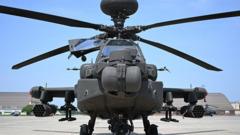
A US Army Apache helicopter crashed in the Persian Gulf near the Strait of Hormuz on Monday, and an uncrewed surface vessel recovered both crew members from the water, according to US officials briefing CBS News.
The autonomous drone located and extracted the two soldiers after their aircraft went down in one of the world's most strategically critical waterways. The successful rescue underscores the expanding role of unmanned maritime technology in military operations across hostile or challenging environments.
The incident occurred in waters heavily trafficked by international shipping and subject to regional tensions. The Strait of Hormuz remains one of the most sensitive geopolitical chokepoints globally, with roughly one-third of the world's seaborne oil passing through annually.
Details on what caused the Apache to crash remain limited. The aircraft type, a Boeing AH-64E, serves as the Army's primary attack helicopter and regularly operates from forward bases throughout the Middle East as part of ongoing counterterrorism and regional security missions.
The use of uncrewed surface vessels for rescue operations reflects a broader shift in military doctrine toward autonomous systems for high-risk scenarios. These platforms reduce exposure to personnel and offer persistent coverage in contested areas. The successful extraction demonstrates the operational reliability of drone technology in time-critical situations, particularly when traditional rescue assets face constraints due to geography or threat environment.
Both crew members survived the incident and were recovered to safety. The military has not released statements about injuries or the operational status of other units in the region.