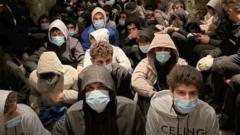
Smuggling networks operating in Libya have escalated tactics beyond traditional exploitation. Armed militias now kidnap migrants en route to Europe and demand ransoms, threatening organ harvesting if families fail to pay.
Iraqi Kurdish migrants became the latest targets. A militia group captured them and issued explicit threats. The ransom demand reached $5,000 per person, a sum designed to extract maximum payment from desperate families abroad.
This scheme operates within Libya's lawless regions, where human trafficking infrastructure intersects with organized crime. Smugglers profit at each stage. Transit camps generate fees. Ransoms generate extortion revenue. The threat of organ removal creates psychological pressure that drives payment faster than conventional kidnapping alone.
Libyan authorities struggle to contain these networks. State capacity remains fractured across the country. Coastal zones serve as launch points for Mediterranean crossings, making them critical trafficking hubs. Militias exploit the security vacuum to operate extraction schemes.
The UK border remains a primary destination for these smuggling routes. Migrants pay thousands to smugglers with promises of safe passage. Instead, they encounter violence, exploitation, and demands for additional funds at hostage points. Families in diaspora communities face impossible choices. Pay ransom money sourced through loans or informal transfers. Risk their relatives' safety and potential organ theft.
This tactic reflects how migration exploitation evolves. Traditional smuggling fees no longer suffice. Criminal networks layered hostage-taking and organ-trafficking threats onto existing migration pathways. The model extracts revenue from multiple points. It maximizes fear. It preys on family bonds and desperation.
Border enforcement in Europe remains focused on interception and deportation. Libya policy receives less attention despite serving as the main staging ground. Without addressing the lawlessness in transit countries, migrants will continue facing escalating extortion and violence. The $5,000 ransom becomes a checkpoint tax on the vulnerable.