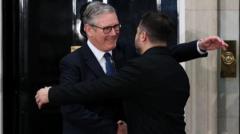
Ukraine's European allies outlined five concrete conditions for any peace negotiations with Russia during a high-level meeting with President Volodymyr Zelensky. The talks occurred as US President Donald Trump redirects American military attention toward potential conflict with Iran, signaling a shift in Washington's strategic priorities away from Ukraine.
The five-point framework represents a unified European position on what any settlement must include. While the BBC report doesn't detail each condition, such frameworks typically address territorial integrity, security guarantees, reparations, accountability for war crimes, and NATO membership pathways. Zelensky's strongest backers in Europe, likely including Poland, the Baltics, and potentially France or Germany, coordinated this approach to establish non-negotiable demands before any negotiating table forms.
The timing matters. Trump's pivot toward Iran suggests Washington may reduce military aid to Kyiv or pressure Zelensky into negotiations on unfavorable terms. By presenting unified European demands now, Zelensky's allies are attempting to anchor any future talks to substantive preconditions rather than allowing Trump administration pressure to force quick capitulation.
The European coordination reflects growing anxiety about American commitment to Ukraine. Trump previously indicated interest in ending the war quickly, sometimes suggesting territorial concessions. Europe fears Washington will leverage its military support to push Kyiv into accepting a settlement that preserves Russian territorial gains. Zelensky faces a precarious situation: his strongest military ally may soon prioritize other conflicts, forcing him to rely more heavily on European backing.
This five-condition framework gives Zelensky political cover domestically. Rather than appearing weak or capitulating to external pressure, he can cite European demands as non-negotiable starting points. It also sends a message to the Trump administration that any deal must satisfy Europe, not just Washington.
The coordination signals Europe intends to play a larger role in Ukraine's post-war future, whether through reconstruction, security provision, or diplomatic leverage. Trump's Iran focus may inadvertently strengthen European unity around Ukraine, at least temporarily.