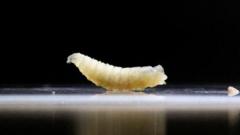
The US Department of Agriculture prepares to deploy an unconventional defense against the screwworm, a parasitic fly larva that burrows into living flesh and causes severe tissue damage. The insect, detected in Florida and other southern states, marks the first domestic outbreak since 1966, triggering urgent containment efforts.
Screwworm infestations devastate livestock and wildlife across Central and South America, where the pest thrives in warm climates. The larvae consume host tissue, often proving fatal without treatment. Each female fly produces hundreds of eggs, allowing populations to explode rapidly under favorable conditions.
The USDA strategy centers on the sterile insect technique, a proven method deployed successfully in Latin America for decades. Researchers plan to breed millions of male screwworms in laboratory conditions, sterilize them through radiation, and release them across affected zones. When sterile males mate with wild females, no viable offspring result, gradually collapsing the population.
The agency also mobilizes trained detection dogs to identify infected animals across pastures and wildlife habitats. Early identification enables rapid treatment with topical insecticides and antibiotics, preventing secondary bacterial infections. Ranchers report devastating losses already, with some cattle herds showing infection rates that spread within weeks.
Quarantine zones now restrict livestock movement across Florida and neighboring states. The USDA increased surveillance efforts at ports and airports, screening imported animals and plant material from endemic regions where screwworm remains established.
Climate change intensifies the threat. Warming temperatures extend the geographic range where screwworm can survive year-round, pushing northward from traditionally affected southern regions. Agricultural officials warn that failure to contain the outbreak quickly risks establishment across the entire southern US livestock industry.
The eradication effort will require sustained funding, interstate coordination, and cooperation from ranchers and veterinarians. Success depends on speed, as screwworm populations double rapidly during warm months.