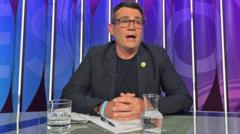
Andy Burnham, the Greater Manchester mayor, signaled his readiness to enter a Labour leadership race if circumstances allow. The statement comes with a critical caveat: he would first need to win the Makerfield by-election to make a tilt at the party's top job viable.
Burnham's positioning reflects Labour's internal dynamics as questions swirl about party direction under current leadership. By anchoring his leadership ambitions to the Makerfield seat, Burnham attempts to thread a needle between ambition and pragmatism. A parliamentary seat serves as essential infrastructure for any serious Labour leadership bid, and Makerfield represents his pathway back to Westminster after his mayoral focus.
The timing carries weight. Burnham has cultivated a profile as a regional powerbroker, delivering tangible wins for Greater Manchester through his devolution negotiations. That track record gives him credibility beyond Westminster insiders. Yet without a Commons seat, mounting a viable leadership challenge grows exponentially harder. Leadership elections demand visible parliamentary presence and daily visibility on the Commons floor.
Burnham's earlier rejection of a 2020 leadership run under different circumstances makes this repositioning notable. His evolution from backbench MP to influential mayor has altered his political calculus. Greater Manchester's relative economic success under his tenure provides ammunition for a future leadership pitch centered on practical delivery rather than ideology.
The Makerfield by-election becomes the proving ground. Should Burnham win that seat and circumstances shift within Labour, he joins a crowded field of potential contenders. The by-election itself tests his personal appeal in a swing seat while offering him the parliamentary credentials necessary for any future leadership bid.