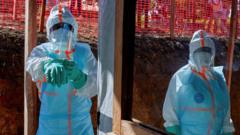
Three organizations race to develop Ebola vaccines as outbreak risks escalate globally. IAVI, Moderna, and the University of Oxford each lead separate vaccine programs targeting the virus.
Moderna leverages its mRNA platform, the same technology behind its COVID-19 vaccine, to engineer an Ebola candidate. The approach allows rapid iteration if viral variants emerge. IAVI, the International AIDS Vaccine Initiative, pursues a different immunological strategy focused on long-term protection. Oxford's team builds on its established viral-vector expertise, drawing from successful coronavirus vaccine work.
The acceleration reflects real-world concern. Recent Ebola clusters in Africa have raised alarm among health authorities monitoring transmission patterns. Previous outbreaks, particularly the 2014-2016 West African epidemic that killed over 11,000 people, underscored the virus's pandemic potential. Current development timelines suggest candidates could reach trials within months rather than years.
Current approved options remain limited. The single licensed Ebola vaccine, Ervebo, offers protection but faces manufacturing bottlenecks. Adding multiple vaccines to the arsenal creates redundancy and ensures broader population coverage during surges.
Funding flows from both public health agencies and private investment. The U.S. government, European health bodies, and foundations have committed resources. Moderna's involvement signals commercial viability alongside public health necessity, a pattern that accelerated post-COVID as pharmaceutical companies view vaccine development as strategic.
Distribution infrastructure built during the pandemic now supports rapid rollout potential. Supply chains for mRNA vaccines, cold-chain logistics, and regulatory fast-tracking mechanisms all exist. These advantages compress typical vaccine development timelines from five to ten years to roughly one to two years.
Success depends on manufacturing scale, regulatory approval speed, and equitable global access. Previous vaccine efforts faced criticism over distribution inequality. These programs face pressure to prioritize African nations where transmission risks remain highest.