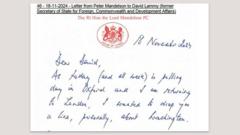
Peter Mandelson's newly released correspondence reveals tensions within the Labour government and No 10 that extend beyond typical political friction. The 1,000-page document collection, disclosed through official channels, contains critiques directed at Labour MPs, the Prime Minister's office, and senior government figures.
Mandelson, the veteran Labour strategist brought into government in a senior advisory role, used private communications to flag concerns about party cohesion and strategy execution. His messages illuminate behind-the-scenes dynamics that rarely surface in public statements. The correspondence shows disagreement between Mandelson and elements of the government apparatus on key policy and messaging matters.
The release of these messages reflects the transparency requirements applied to contemporary government communications. Rather than revealing scandals, the documents expose the routine friction between advisers with different approaches to governance and strategy. Mandelson's criticisms of specific MPs and office operations suggest he operated with directness typical of his decades-long career shaping Labour politics.
No 10's inclusion in his critiques indicates Mandelson raised operational or strategic concerns with the Prime Minister's immediate team. Whether these addressed staff performance, policy direction, or communication strategy remains unclear from available reporting. The fact that such candid internal communications entered the public record underscores how modern government oversight functions.
These messages matter for understanding how current Labour leadership operates internally. They confirm that experienced operators like Mandelson maintain independent perspectives and voice concerns directly rather than remaining silent. The 1,000-page document serves as a window into working relationships between government figures who navigate between loyalty and frank assessment of effectiveness.