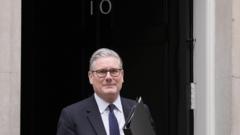
Sir Keir Starmer's appointment of Lord Mandelson as ambassador to the United States represents a defining moment that will shape the historical assessment of his premiership. The BBC Politics report indicates the decision continues to generate substantial damage for the Labour government.
Mandelson, a towering figure in British politics who served as European Trade Commissioner and Northern Ireland Secretary under Tony Blair, carries a complex legacy. His return to frontline politics under Starmer triggered immediate controversy. Critics argue the appointment signals poor judgment, particularly given Mandelson's longstanding association with New Labour's more divisive era and questions about his suitability for diplomatic representation.
The appointment contradicts Starmer's initial positioning as a break from the past. Instead, it reads as a retreat into establishment politics at a moment when the government faced mounting domestic pressures. The backlash extended beyond Westminster, touching on public perception of whether Starmer truly represented change or merely recycled familiar faces.
Mason's analysis suggests this decision will linger in historical narratives of the Starmer administration, comparable to other premiership-defining moments that shape public memory. The reputational cost appears to outweigh any perceived diplomatic benefit of deploying a veteran operator in Washington.
The timing amplifies the damage. Rather than opening with fresh faces and demonstrating a departure from Labour's previous era, Starmer handed opponents a ready-made criticism about his commitment to genuine renewal. For a prime minister staking his legitimacy on modernization and clean governance, the Mandelson appointment signals continuity with an old guard many voters hoped to see depart.
This single personnel decision encapsulates larger questions about whether Starmer controls his narrative or remains hostage to it.