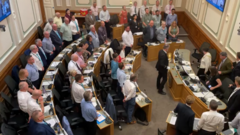
A local council remains without a leader after a second failed election attempt. Neither the Reform UK candidate nor the Green Party candidate secured the necessary votes to claim the role.
The deadlock reflects deeper fragmentation within the council chamber, where no single party commands an outright majority. In competitive three-way contests, votes split across multiple candidates, leaving neither contender with sufficient support to win outright. This pattern mirrors broader shifts in local politics across the UK, where traditional two-party dominance has fractured under pressure from insurgent movements like Reform UK and growing Green representation.
The stalemate creates immediate practical problems. Without a leader, key council functions falter. Budget decisions stall. Strategic priorities remain frozen. Staff lack clear direction from elected leadership. Extended vacancies can trigger emergency protocols or force councils to operate under temporary arrangements that bypass normal governance structures.
For Reform UK, the failure underscores challenges the party faces translating national momentum into local institutional power. The party has surged in polling and gained several council seats, but winning outright control or securing leadership positions remains difficult. For the Greens, similarly on an upward trajectory in local elections, the result shows they remain a significant minority force rather than a dominant power at the council level.
A third election attempt may be imminent, or the council could explore power-sharing arrangements that previous voting rounds rejected. Cross-party coalitions offer one path forward, though they require negotiations and compromise among groups with starkly different agendas.
The situation highlights vulnerabilities in local governance when traditional power structures dissolve without emergent alternatives. Councils thrive on clear leadership. Prolonged leadership vacancies damage service delivery and public confidence in local democracy.