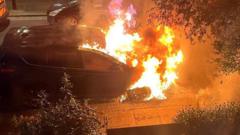
A Romanian national of Ukrainian descent, Stanislav Carpiuc, faced court proceedings after being accused of conspiring to set fire to a vehicle connected to UK Prime Minister Keir Starmer. The prosecution alleged that Carpiuc refused to participate in filming the attack, according to testimony presented in court.
The charge centers on a conspiracy to commit arson targeting a car with links to the prime minister, marking a serious security incident within British politics. Carpiuc's refusal to document the alleged attack suggests fractures within any potential conspiracy network, with court evidence indicating disagreement over operational details among those involved.
The case underscores growing concerns about political security in the UK. Attacks or plots targeting sitting leaders represent rare but significant breaches of public safety. Starmer, who assumed office in July 2024, now faces security implications tied to this alleged conspiracy.
Court proceedings revealed that Carpiuc's resistance to filming distinguishes his role within the alleged plot. Prosecutors presented this refusal as evidence of his involvement in planning while simultaneously distancing himself from direct participation in documented evidence. Such details often prove critical in conspiracy trials, where prosecutors must demonstrate shared intent among multiple parties regardless of individual roles.
The investigation highlights how law enforcement monitors potential threats to government officials. Romanian and Ukrainian nationals working together in such a plot raise questions about transnational coordination and potential links to broader geopolitical tensions, though authorities have not publicly confirmed any such connections.
The trial continues as prosecutors build their case against Carpiuc. The outcome could influence how British security services assess emerging threats to political figures, particularly given the evolving nature of political violence and extremism across Europe.