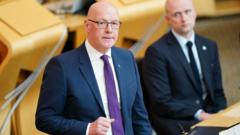
First Minister John Swinney rejected accusations that Scottish National Party leadership moved to bury the Peter Murrell scandal after the SNP's former chief executive pleaded guilty to embezzlement charges. Opposition MSPs attacked both Swinney and predecessor Nicola Sturgeon over their handling of the case, with critics arguing the party failed to act decisively when misconduct allegations first surfaced.
Murrell, who served as Sturgeon's husband and the SNP's operational backbone for two decades, admitted to misappropriating party funds in what became one of Scotland's most damaging political scandals. His guilty plea followed a lengthy investigation that exposed serious governance failures within the party's finance apparatus.
The controversy erupted after the SNP faced cash flow crises and membership donation questions. Sturgeon herself faced questioning over whether she knew about financial irregularities, though she avoided criminal charges. Her departure as party leader in February 2023 opened space for Swinney's ascension, yet the party remained shadowed by corruption allegations and eroded public trust.
Opposition parties used Murrell's conviction to hammer both Swinney and Sturgeon. Scottish Conservative and Scottish Labour MSPs pointed to the SNP's slow response, internal cover-ups, and public relations management of the crisis rather than transparent accountability. They argued the party prioritized reputation management over institutional reform.
Swinney countered that his administration had cooperated fully with authorities and implemented new oversight mechanisms. He framed the guilty plea as validation of those systems working. Yet the optics remained damaging for SNP brand positioning ahead of next elections, with voters already skeptical of the party's leadership after Sturgeon's decade-plus tenure.
The case underscores how internal corruption can corrode even dominant parties. For the SNP, Murrell's conviction represents a reckoning that extends beyond one individual to systemic accountability questions about power consolidation and financial oversight in Scottish politics.