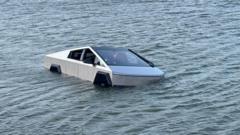
A Tesla Cybertruck driver in north Texas was arrested after deliberately driving the vehicle into Grapevine Lake, apparently to test the company's "wade mode" feature. The driver abandoned the truck after water began seeping into the cabin near the shoreline.
The stunt happened in Grapevine, located northwest of Dallas. Police responded to the scene and found the Cybertruck partially submerged. The driver had already left the vehicle when authorities arrived.
Tesla introduced "wade mode" as part of the Cybertruck's amphibious capabilities, a feature the company promoted during the vehicle's development. The mode is designed to help the vehicle traverse shallow water obstacles, though Tesla's documentation emphasizes it works best for fording shallow water crossings rather than deliberate submersion in lakes or deep water.
This incident reflects a broader pattern of owners testing extreme features on high-profile vehicles. The Cybertruck, which began deliveries in late 2023, comes loaded with experimental driving modes and autonomous features that have drawn both enthusiast interest and safety scrutiny.
Wade mode joins other Cybertruck features like self-leveling suspension and all-terrain capabilities that appeal to buyers seeking adventure-ready electric vehicles. However, this arrest underscores the line between authorized testing and reckless endangerment. Intentionally driving any vehicle into a lake risks environmental contamination, property damage, and public safety hazards.
Tesla has not commented on the incident. The company continues rolling out software updates to Cybertruck owners, some of which introduce new driving modes and capabilities. The arrest serves as a cautionary reminder that promotional features, while designed for legitimate off-road scenarios, can lead to legal consequences when misused in public spaces.