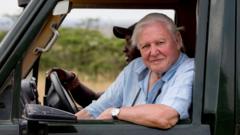
Bristol has become the epicenter of natural history television, producing 80 percent of the world's wildlife documentaries. Sir David Attenborough's decades-long partnership with the BBC Natural History Unit, based in the city, transformed Bristol into what industry insiders call "Green Hollywood."
The BBC's Natural History Unit, founded in 1957, anchors Bristol's dominance. Attenborough's collaborations on landmark series like "Planet Earth," "The Blue Planet," and "Frozen Planet" established the template for prestige wildlife programming. These shows didn't just captivate audiences. They reshaped how broadcasters worldwide approach nature content.
Bristol's ecosystem extends beyond the BBC. Independent production companies cluster around the Natural History Unit, creating a talent pipeline of filmmakers, scientists, and editors specialized in wildlife storytelling. Production designers, sound engineers, and visual effects teams all gravitated toward the city, building competitive advantage in an increasingly crowded content landscape.
Attenborough's global celebrity provided cultural weight that attracted investment and talent to Bristol. His narration became synonymous with quality nature content. When streamers and networks hunt for prestige wildlife projects, they look to Bristol's institutional knowledge and established relationships with field researchers, conservation organizations, and broadcasters.
The concentration has economic implications. Bristol's natural history sector generates substantial employment and positions the city as a media hub rivaling London. Production budgets flow through local vendors, sound stages, and post-production facilities.
However, the industry faces pressure from streaming giants and global competition. Netflix and Apple produce their own nature content, sometimes with larger budgets than traditional broadcasters. Younger platforms challenge the BBC's production monopoly, though Bristol's technical expertise and established networks remain difficult to replicate.
Attenborough's legacy transcends entertainment. His programming influenced conservation policy and public attitudes toward environmental protection. Bristol's role as the epicenter of natural history television means the city shapes global environmental consciousness through image and narrative.