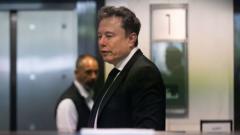
A federal jury rejected Elon Musk's lawsuit against OpenAI and CEO Sam Altman, finding that Musk waited too long to file his claims. The verdict centered on a statute of limitations issue rather than the merits of Musk's allegations about the company's departure from its original nonprofit mission.
Musk claimed Altman had effectively "stolen a charity" by transforming OpenAI from a nonprofit research organization into a for-profit enterprise. He argued that the company had violated its founding principles and his understanding of the arrangement when he helped establish it in 2015.
The jury's decision suggests jurors believed Musk knew or should have known about his grievances well before filing suit, making his case time-barred under applicable law. This procedural ruling avoids a deeper examination of whether OpenAI's pivot to a capped-profit model actually breached its original mission.
The loss marks a significant setback for Musk, who has clashed repeatedly with Altman over the company's direction and corporate structure. Musk departed OpenAI's board in 2018 but maintained public criticism of the organization as it increasingly commercialized its AI research and secured major funding deals, including a $13 billion investment from Microsoft.
The case drew industry attention as it highlighted tensions within the AI sector over how nonprofit-to-profit transitions should operate and what obligations founders maintain toward their original charitable visions. OpenAI's evolution from research nonprofit to a closely held for-profit with substantial venture backing exemplifies broader shifts in how AI development is financed and structured.
Musk's legal defeat doesn't end his broader feud with OpenAI. The Tesla and xAI founder has continued publicly criticizing OpenAI's commercial direction while separately building his own AI ambitions through his company xAI, positioning himself as an alternative to Altman's vision.