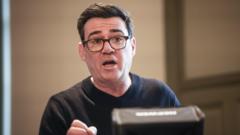
Andy Burnham, Mayor of Greater Manchester, is taking a fiscal discipline approach to reassure financial markets amid economic uncertainty. The Labour politician has committed to adhering to strict fiscal rules, signaling his intention to manage both regional governance and broader market confidence.
Burnham's move comes as Labour navigates concerns about government spending and economic stability. By publicly committing to fiscal constraints, Burnham positions himself as a fiscally responsible leader capable of managing regional finances without fueling inflation or market volatility. This stance reflects Labour's broader strategy under Keir Starmer to distance itself from perceptions of reckless spending, a persistent criticism during the previous administration.
The timing matters. Burnham faces the Makerfield byelection, a competitive contest in a traditionally Labour-held seat. Demonstrating fiscal credibility helps shield Labour from Conservative attacks on economic competence while energizing the party's business community supporters. Markets respond to consistency and discipline, and Burnham's messaging targets both electoral and financial audiences simultaneously.
This reflects a wider Labour strategy of proving fiscal orthodoxy to institutional investors and the Bank of England. After years of pandemic spending and inflation concerns, financial markets remain sensitive to government commitments. Burnham's explicit fiscal rules commitment offers concrete reassurance that regional spending remains controlled and predictable.
The byelection backdrop amplifies the symbolic weight of his statement. Losing Makerfield would signal weakness heading into local elections and a potential general election campaign. By coupling fiscal discipline with electoral messaging, Burnham attempts to frame Labour as the party of economic stability, appealing to both conservative voters in swing regions and to nervous market observers watching sterling and gilt yields.